Rethinking the Daily Commute: Why Unified Mobility Is Becoming a Strategic Priority for GCCs in India
Imagine this. Every day, thousands of employees leave their homes trusting that their commute to work will be safe, predictable, and efficient. For many Global Capability Centres (GCCs) in India, this daily journey is not just a logistical task. It directly shapes productivity, employee experience, safety outcomes, and even employer brand.
Yet, despite its scale and impact, employee commute management is often fragmented, reactive, and treated as a cost centre rather than a strategic function.
This is where the idea of unified corporate commute management comes into focus.
As GCCs scale across Indian cities and adopt hybrid work models, the need for integrated, technology-led, and data-driven mobility systems has never been greater.
The Changing Meaning of Corporate Commute
Corporate commute today goes far beyond moving employees from point A to point B.
For GCCs, it touches multiple business priorities at once. Operational efficiency, employee safety, compliance, sustainability, cost optimisation, and workforce satisfaction are all influenced by how well commute programs are designed and executed.
A unified approach to commute management means breaking away from manual coordination, vendor fragmentation, and disconnected decision-making. It means bringing together routing, scheduling, vendor management, compliance, and employee communication onto a single, transparent platform.
At its core, unified mobility enables:
- Centralised visibility into routes, trips, vendors, and costs
- Consistent employee experience across locations and shifts
- Real-time tracking, alerts, and exception management
- Predictable operations supported by data and automation
- Better governance across safety, compliance, and sustainability
This shift transforms commute from a daily firefighting exercise into a structured, measurable business function.
Why GCCs Can No Longer Ignore Commute Strategy
Across India, GCCs are expanding rapidly in scale and complexity. Multiple cities, staggered shifts, hybrid attendance, and diverse workforce expectations have made commute planning significantly more challenging.
Disconnected and manual systems struggle to keep up with this reality. Spreadsheets, phone-based coordination, and multi-vendor dependency often lead to inefficiencies, lack of visibility, delayed reporting, and inconsistent employee experiences.
At the same time, employee expectations are rising. Predictable pickup times, route flexibility, safety transparency, and clear communication are no longer optional. They are fundamental to trust and retention.
Globally, organisations are recognising that mobility is deeply linked to employee experience and operational resilience. GCCs that modernise commute operations are seeing benefits in cost control, service reliability, and leadership-level visibility.
Read More
India’s GCC Commute Landscape at a Turning Point
India presents a unique commute challenge. High-density cities, traffic congestion, varied infrastructure quality, and rapid urban expansion make employee mobility complex at scale.
While many GCCs have invested in digitisation for core business functions, commute operations often lag behind. Technology adoption exists, but intelligence and predictability remain limited.
Hybrid work has further amplified this gap. Fluctuating attendance patterns make manual planning unreliable, exposing the limits of traditional commute models.
Yet, the opportunity is clear.
With growing focus on employee experience, sustainability goals, and compliance expectations, GCCs are now re-evaluating how commute programs are structured, governed, and measured.
From Operational Task to Strategic Capability
One of the biggest challenges in corporate commute management is fragmented ownership. Facilities, Admin, HR, Finance, and Transport teams all influence decisions, but often without a unified view or shared metrics.
This fragmented approach keeps commute discussions tactical rather than strategic.
A unified commute platform changes this dynamic by creating a single source of truth. It enables leadership to track performance, costs, safety metrics, and sustainability outcomes with the same rigor applied to other enterprise functions.
More importantly, it allows organisations to move from reactive problem-solving to proactive planning.
What the Future of Corporate Commute Looks Like
The future of GCC mobility is predictive, automated, and employee-centric.
Leading organisations are already exploring advanced routing, intelligent scheduling, EV adoption, carbon tracking, and real-time analytics to optimise their commute programs. The goal is not just efficiency, but resilience and experience at scale.
Unified mobility platforms act as the foundation for this transformation, enabling GCCs to standardise operations while remaining flexible to local realities.
As commute programs mature, transport shifts from being a hidden operational burden to a visible lever for employee satisfaction, sustainability impact, and cost governance.
What to Expect in the Handbook
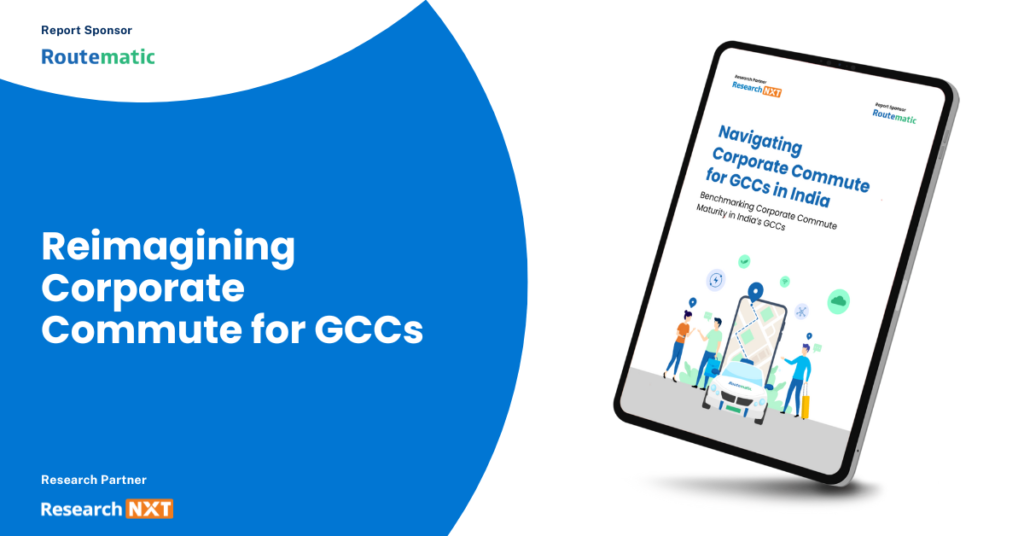
“Navigating Corporate Commute for GCCs in India” will cover:
- Commute Maturity in GCCs: A snapshot of how GCCs manage employee transport today and where they stand on the maturity curve.
- Key Challenges: The operational, technology, and governance gaps limiting scalable and predictable commute programs.
- Best Practices and Benchmarks: How leading GCCs are structuring and optimising commute operations across hubs.
- Technology Shaping Mobility: The tools and platforms transforming corporate commute, from automation to predictive planning.
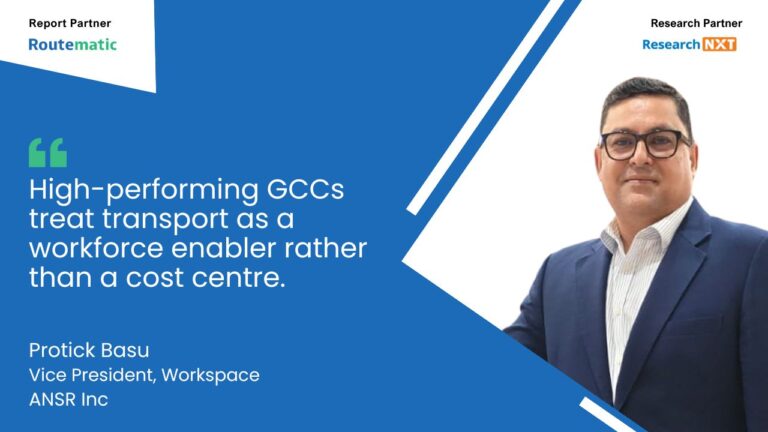
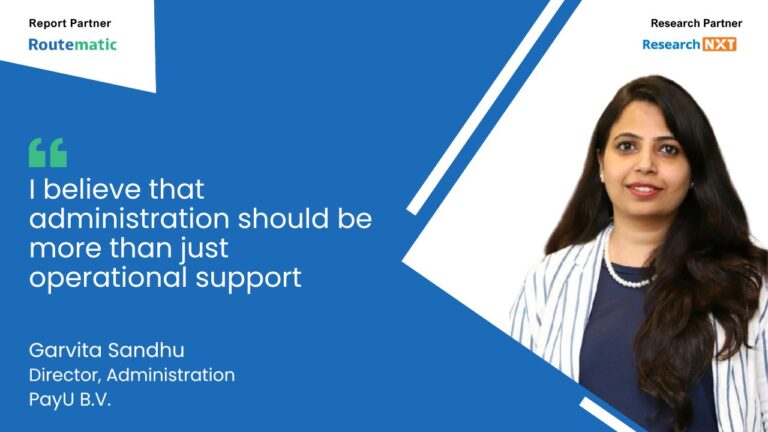
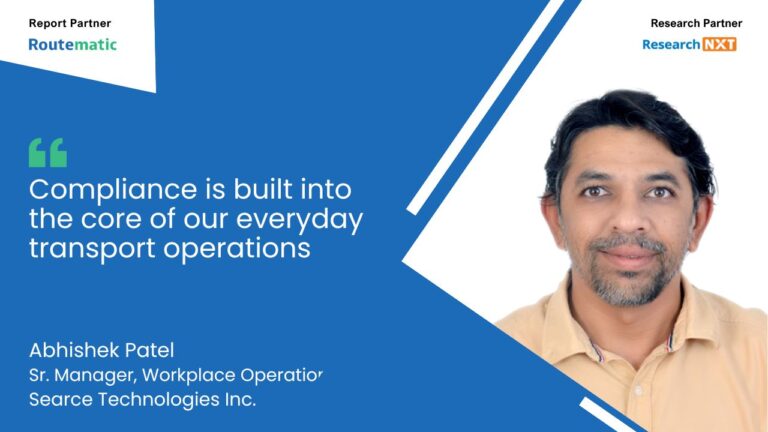
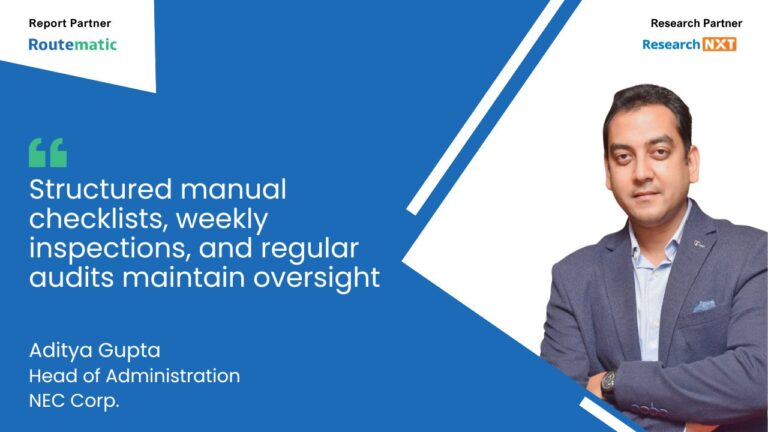
- Expert Insights and Real-World Learnings: Practical perspectives from GCC leaders on turning commute into a strategic advantage.
Stay Tuned for the Official Launch!
The upcoming report, “Navigating Corporate Commute for GCCs in India,” offers a comprehensive, data-backed view of how employee commute is evolving across India’s Global Capability Centres.
Built on large-scale surveys, operational data, and leadership insights, the report will serve as a practical guide for GCC leaders looking to move from fragmented, manual commute operations to unified, intelligent mobility models.