From Process Efficiency to Strategic Procurement: Transforming Vendor Ecosystems at Vesuvius India Ltd
In this interview with Research NXT, Ashis Jain, Director – Procurement at Vesuvius India Ltd., shares insights from his journey starting as a Management Trainee at Tata Steel to leading an enterprise-wide procurement operations. He highlights evolving priorities in vendor management, category management, transport cost optimisation, compliance challenges, and the emerging role of sustainability in strategic sourcing. The conversation also uncovers process-driven approaches and the shift toward automation and ESG-led decisions in procurement.
Key Takeaways:
- Major vendor management challenges stem from compliance risks, fragmented data and manual processes, highlighting the need for automation and centralised vendor information systems.
- Fuel price volatility affected by geo-political turmoils, container freight fluctuations and turnaround time coupled with optimisation are few of the toughest transport cost components to control.
- Electric and alternative-powered fleet adoption presents one of the biggest cost-efficiency opportunities in the next 12 months as far as employee commute and land side movements are concerned.
- Strategic alignment must happen between sourcing and HR/Facilities at the process level, with procurement retaining final decision authority.
"Lack of technology adoption to impart process transparency and accountability are some of the additional challenging areas."
Could you share a brief overview of your professional journey, which led you to your current position as Director- Procurement at Vesuvius India Ltd.?
Ashis: I began my career as a Management Trainee – Commercial in the Group Strategic Procurement Division of Tata Steel, after completing my MBA in International Business from IIFT Delhi. With a metallurgical undergraduation background, I was actively involved in improvement projects in collaboration with suppliers, particularly in the consumables space. This experience helped me transition into the core sourcing function and eventually lead the vertical responsible for sourcing process consumables like refractories, chemicals, rolls, and others.
Over the years, I gained extensive exposure to multi-site and multi-region sourcing functions, working closely with internal steelmaking divisions. The role evolved into driving global synergy, TCO optimisation and process streamlining for bulk commodities such as metals, ferro alloys, oil and lubricants. The combination of a TQM-based approach and focus on scale, synergy, simplification and sustainability shaped my foundation in procurement and supply chain. Leveraging this expertise, I transitioned to Vesuvius India Ltd., where I now oversee procurement across diversified verticals of MRO, services, logistics and raw materials, thereby addressing both revenue and Capex requirements of an organisation.
What are your primary responsibilities in your current role, and how have these responsibilities evolved since you joined the organisation?
Ashis: My team is responsible for managing end-to-end sourcing spend, leading process improvements, standardisation initiatives, supplier evaluation and performance management, along with risk mitigation and sustainability alignment. I oversee working capital efficiency and ensure compliance across procurement operations. As part of the regional leadership team, my role now extends beyond sourcing to support organisation wide strategic imperatives and active involvement in customer led initiatives and operations management.
Read More
What are the key factors you consider while selecting or evaluating vendors?
Ashis: The three most critical factors are organisation credibility, financial strength, and capacity or capability, with specific emphasis on process control and statistical quality control.
Which cost components in transport are hardest to control or forecast accurately?
Ashis: Cost unpredictability largely stems from fuel price volatility, ocean freight fluctuations, fleet availability (turnaround time), vehicle breakdowns, and loading/unloading-related detentions which at times are beyond one’s direct control.
What typically makes vendor management more complex or easier?
Ashis: Complexity increases due to compliance risks (GST, PF/ESI, sanctions), legal issues, large vendor pool and limited data transparency, along with manual processes and low safety adherence. Ease of management can be enabled through automation, scheduled data updates, OTP-based validations, accuracy checks, and centralised digital vendor registry systems.
How transparent is vendor reporting, and where do you see gaps?
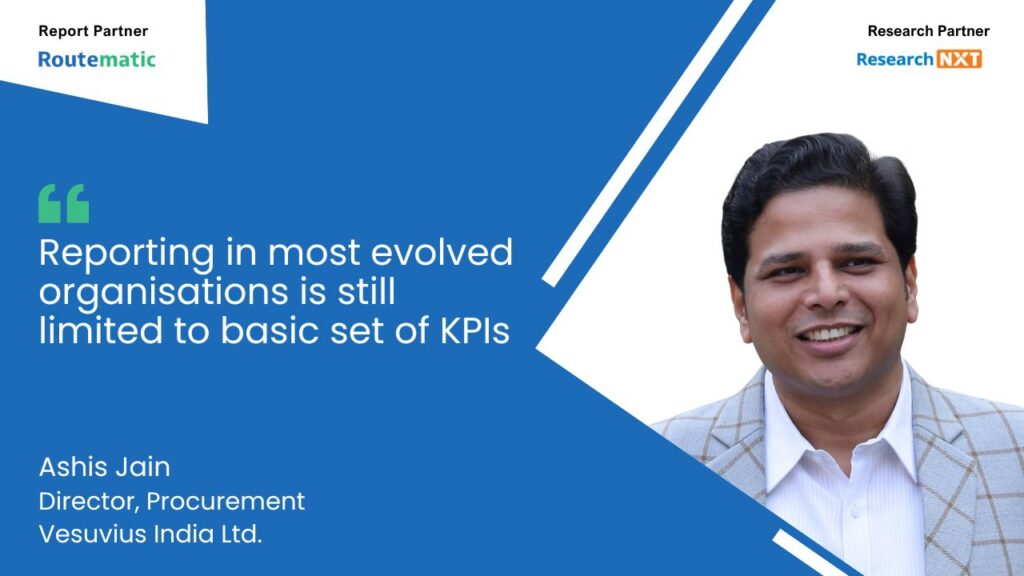
Ashis: Reporting in most evolved organisations is still limited to basic set of KPIs. The biggest gaps are in advanced performance and efficiency metrics, sustainability monitoring, cybersecurity risk evaluation, Tier-II supply chain mapping and proactive compliance tracking.
Where do you see the biggest pain points during renewals or billing?
Ashis: Major challenges include limited GST forward charge adoption, delayed or erroneous invoice submissions, absence of KPI-based performance visibility, and manual record-keeping errors (especially for commute vehicles—incorrect kilometre logs, time sheet management, and driver compliance awareness). Lack of technology adoption to impart process transparency and accountability are some of the additional challenging areas.
How do sustainability or ESG considerations factor into procurement decisions today?
Ashis: There is growing adoption but still selectively focused on scope I elements, alternative fuels, and energy usage within transport operations. For vehicle fleets, decisions now also consider life cycle cost implications such as battery replacement, charging time, increased vehicle count, and end-of-life scrap value.
If you could change one thing in the vendor ecosystem to optimise costs, what would it be?
Ashis: Implement automated GPS-linked check-in/check-out systems with odometer integration and deviation tracking (with approvals) for commute logistics.
How do you align procurement decisions with HR/Facilities/Operations priorities?
Ashis: Alignment happens at the process and protocol level, while final decision-making remains procurement-driven, structured in consultation with support functions.
Where do you see the most significant opportunity for cost-efficiency in the next 12 months?
Ashis: Adoption of electric and non-conventional energy-based vehicles presents one of the immediate opportunities for cost optimisation while embracing ESG matrix in decision making. Additionally data led insights driving operational efficiency, eliminating non value added activities, redundancy waste minimisation and proactive and insights led planning powered by strong analytics and AI integration can help deliver more value for money.