From Operational Support to Strategic Administration: Designing Equitable and Compliant Transport Frameworks
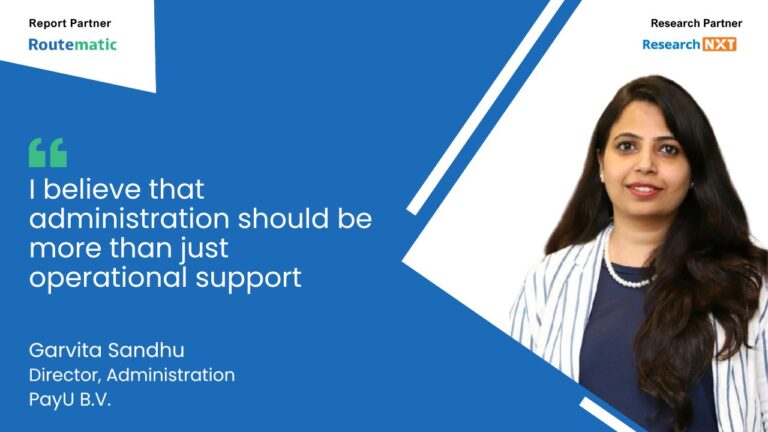
In this interview with Research NXT, Garvita Sandhu, Director – Administration at PayU, shares insights from her cross-industry journey spanning IT, automobile, retail, and FinTech. She discusses how employee transportation has evolved from a back-office function into a critical lever for employee experience, safety, and organisational culture. The conversation highlights PayU’s philosophy of equitable transport standards, rigorous compliance frameworks, human-centric risk management, and the thoughtful balance between manual processes and future-ready digital innovation. Garvita also outlines emerging risks in ground transportation and shares her vision for AI-driven compliance authentication systems in the years ahead.
Key Takeaways:
- Equity-led, standardised commute: Uniform safety, service, and experience standards across roles, locations, and designations.
- Compliance-first with human oversight: Strong SOPs, manual checks, and layered controls ensure end-to-end safety and accountability.
- Practical risk management: Focus on process strength, contingencies, and rapid recovery rather than the myth of zero lapses.
- Future-ready and trust-driven: Human-centric measures today, with a roadmap toward AI-enabled, real-time compliance verification.
Could you share a brief overview of your professional journey, which led you to your current position as Director- Administration at PayU?
Garvita: My professional journey has been an adventurous and diverse one, spanning multiple industries including IT, automobile, retail, and now FinTech. Each transition has been a valuable learning experience that has shaped my approach to administration and organisational development.
Throughout this journey, I have had the opportunity to learn the fundamentals of administration from the ground up, which provided a strong foundation to build upon. What has been particularly rewarding is witnessing and driving the evolution of the administration function itself—transforming it from a traditional, task-oriented role into one that acts as a catalyst for organisational change.
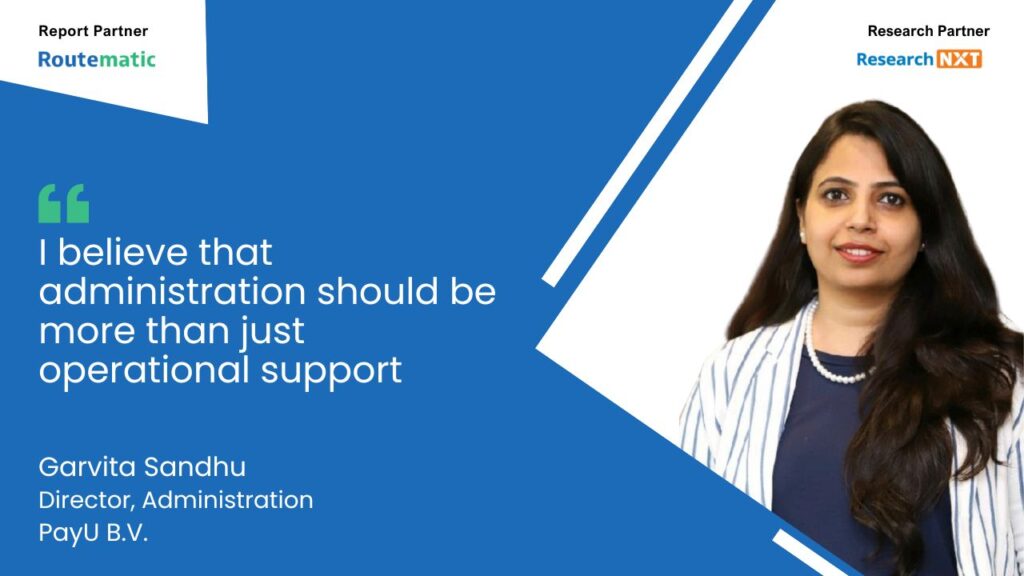
In my current role as Director of Administration at PayU, I focus on enhancing employee experiences and creating workplaces that truly reflect and amplify our organisational culture. I believe administration should go beyond operational support; it should create environments where people thrive and where company values are brought to life through every interaction and space. This cross-industry experience has given me unique insights into diverse organisational cultures and operational challenges, which I now apply to drive meaningful change in the FinTech space. My goal has always been to position administration as a strategic function that contributes to both employee satisfaction and business success.
How standardised are your transport processes across locations or shifts today?
Garvita: We maintain a consistent approach to employee transportation by partnering with the same travel provider across all our locations. This enables us to deliver standardised service quality, ensure accountability, and maintain uniform operating standards throughout the organisation.
A core principle of our transportation philosophy is equity. We do not differentiate vehicle categories based on employee designations, as we believe every team member deserves the same level of comfort, safety, and service, irrespective of their role or seniority.
Employee safety and security remain our top priorities. To support this, we have established comprehensive Standard Operating Procedures (SOPs) that are implemented uniformly across all locations. These SOPs cover rigorous driver background verification and security checks, regular vehicle cleanliness and maintenance protocols, strict cab compliance requirements, and consistent safety procedures that apply regardless of geography.
This standardised framework ensures that every employee experiences the same high level of safety, security, and service quality during their daily commute. Our transportation policies are designed with the belief that employee safety should never be compromised, and this commitment is reflected through consistent standards across our entire network.
Read More
How do you ensure regulatory and internal compliance (driver KYC, permits, safety) and integrate these controls with overall workplace safety and access protocols?
Garvita: We have implemented a comprehensive, multi-layered approach to ensure both regulatory and internal compliance, seamlessly integrating these controls with our overall workplace safety and access protocols. Our travel and cab vendor onboarding process is intentionally stringent, and no partnership is finalised unless all mandatory certifications are in place. These include valid vehicle registration documents, up-to-date pollution certificates, complete driver background and history checks, verified identification proofs, and police verification records for every driver.
To further strengthen internal governance, we have built robust control mechanisms into our daily operations. Driver details are received well in advance of scheduled pickups, and our internal travel desk conducts mandatory pre-pickup verification calls for every trip. Reconfirmation before employee pickup is a non-negotiable step to ensure driver authenticity and adherence to safety standards.
We also have enhanced compliance measures for higher-risk scenarios. For female employees travelling after 7:00 PM, all trip details are carefully captured within our systems, and escorted drop arrangements are mandatory in line with our compliance framework. These additional safeguards ensure heightened protection during late-hour travel.
All transportation-related compliance measures are fully integrated with our broader workplace safety ecosystem, ensuring that employee safety is not limited to office premises but extends seamlessly across the entire commute experience.
What tools or audits do you use to ensure zero lapses?
Garvita: I believe in being transparent about our current operational reality while clearly outlining the systematic measures we have in place to minimise lapses. Given our current operational scale, we have not yet evaluated digitalisation options and therefore do not use digital tools for error capture or tracking. Our processes remain largely manual, but they are supported by strong, well-defined checks to ensure reliability and consistency.
Each team member follows a comprehensive checklist framework designed to ensure that no cab bookings are missed, all safety and compliance requirements are completed, and employees experience a smooth and seamless journey from pickup to drop. This structured approach allows us to maintain high service standards even within a manual operating environment.
At the same time, I believe in being realistic about operational risk. To err is human, and ground transportation inherently involves variables beyond our control—such as traffic disruptions, mechanical issues, or unforeseen breakdowns. Acknowledging this reality, we always ensure contingency measures are in place. Every scenario has a Plan B, backup transportation options are readily available, and quick-response protocols are activated immediately during emergency situations.
Philosophy on ‘Zero Lapses’: Honestly, I believe ‘zero lapses’ is somewhat of a myth in ground transportation. Instead of chasing an impossible standard, we focus on robust process checks, quick recovery mechanisms, and accept that Murphy’s Law will occasionally come into play. Our strength lies in how quickly and effectively we respond when challenges arise, ensuring minimal impact on employee experience.
This practical approach has served us well in maintaining high service standards while being prepared for real-world operational challenges.
How do you manage night shifts or vulnerable employee commute scenarios?
Garvita: We do not work on night shifts.
How do you coordinate with other departments (HR, Finance, Transport) on policy changes?
Garvita: Our approach to cross-departmental coordination is built on a simple but powerful principle: the employee is the primary customer for HR, Finance, and Transport. When all three functions operate with this shared, employee-centric mindset, alignment becomes far more natural and effective.
We work with like-minded teams who are unified by a single objective—delivering a safe, seamless, and positive employee experience. This shared vision helps break down departmental silos and ensures that any policy decision is evaluated through the lens of employee impact rather than departmental convenience.
When implementing policy changes, each function contributes its expertise while staying anchored to this common goal. Finance focuses on achieving cost efficiencies without compromising safety or service quality, HR prioritises employee safety and overall experience to ensure policies enhance well-being, and our transport partners ensure strict adherence to SOPs, compliance standards, and operational excellence.
The strength of this model lies in having teams aligned around one clear purpose. When everyone understands that employee experience and safety are non-negotiable, decision-making becomes clearer and consensus is easier to achieve. Regular joint reviews allow teams to share insights, address challenges, and refine policies collaboratively, ensuring outcomes are holistic and employee-first. This approach has enabled us to build policies that are operationally sound, cost-effective, and genuinely focused on serving our most important stakeholders—our employees.
Where do you see the most significant risk areas emerging in the future?
Garvita: Looking ahead, I see three key risk areas emerging in ground transportation that organisations must proactively address. The first is rising traffic congestion and infrastructure constraints in urban centers, which make commute times increasingly unpredictable and impact employee productivity, operational costs, and driver safety, reinforcing the need for dynamic route planning and real-time adjustments.
The second risk stems from the shift to hybrid work models, which has disrupted traditional transportation demand patterns. Irregular attendance and multi-shift operations make demand forecasting more complex, requiring organisations to balance cost efficiency with service availability while maintaining consistent safety standards.
The third emerging risk is over-dependence on digital solutions without adequate backup mechanisms. While technology improves efficiency, excessive reliance can expose operations to system failures, cybersecurity risks, and skill gaps, making strong manual fallbacks essential for continuity.
To address these challenges, our focus is on building resilient transport systems that combine technological efficiency with human oversight and robust backup processes, ensuring safety and employee experience remain uncompromised.
If there were no constraints, what compliance innovation would you want to implement?
Garvita: I would love to answer this, as I am personally working on drafting a plan around the same. While it is still far from the execution stage, I would genuinely like to see it implemented in practice. The concept is called an AI-Driven Vehicle and Driver Compliance Authentication System. If there were no constraints, I would implement an intelligent chatbot that automatically verifies cab drivers and vehicles through direct integration with government databases.
When an employee books a cab, the system would instantly verify critical parameters such as driver license validity and background, vehicle registration status, outstanding traffic violations, any police complaints or vehicle holds, and city or state specific compliance requirements.
The chatbot would work through real-time integration with RTO databases, traffic police systems, and criminal record repositories to deliver immediate verification results along with a compliance score for every ride.
The key benefits of such a system are significant. It would enhance safety by allowing only verified drivers with clean records, provide legal protection by demonstrating clear due diligence, and ensure transparency by enabling employees to view verification details before travel. It would also reduce risk by immediately flagging problematic drivers or vehicles and ensure consistent compliance with local regulations through automation.
This approach would create a zero-trust transportation ecosystem, where every corporate ride is backed by real-time government data verification, eliminating manual oversight gaps. The goal is simple: trusted rides through verified data, making corporate transportation as secure and compliant as possible.
How do you measure the success of your transport compliance strategy?
Garvita: At present, I follow a human-centered approach to measuring transport compliance and success, as we have not yet implemented digital satisfaction or tracking tools. One of the most telling indicators for me is visual employee satisfaction—seeing employees return from their commutes or trips looking relaxed, comfortable, and stress-free. This often reflects that our transport arrangements have met expectations around safety, comfort, and reliability.
I also place significant value on spontaneous and informal feedback. Quick messages or unprompted comments from employees appreciating punctual pickups, professional drivers, or smooth travel experiences serve as strong, authentic indicators of satisfaction. In parallel, we track service adherence by monitoring driver punctuality and on-time service delivery, as these directly influence both employee experience and operational efficiency.
Beyond employee feedback, regular internal audit checks play a key role in measuring success. These audits ensure that transport partners consistently maintain required documentation, insurance coverage, and safety standards in line with company policies and regulatory requirements. We also monitor adherence to established protocols to ensure consistency across our compliance framework.
While this approach is largely informal, it captures genuine employee sentiment and provides direct insight into experience quality, while helping us maintain strong partnerships with reliable transport providers. Looking ahead, I see clear value in introducing digital tools to complement these human insights and build more comprehensive success metrics, while still preserving the personal touch that currently works well.
Are there any global norms or processes that your transport programme needs to adhere to?
Garvita: No, at present we do not follow any global norms or processes.
Before wrapping up the interview, I would like to know your expectations from this report. What do you think would be most valuable for the readers of the report?
Garvita: I expect this report to reach the right stakeholders in Administration and Transport who are actively shaping the future of employee transportation. It should help decision-makers understand how employee commute programs are evolving from traditional models to more technology-enabled, compliance-focused frameworks, without losing the human-centered service that employees value.
The key message for readers is that innovation should strengthen, not replace, what already works well. AI and digital tools can provide a strong safety and compliance backbone, while the human touch continues to deliver trust, comfort, and positive employee experiences. I want readers to walk away with practical insights and real-world examples that show how organisations can enhance safety and compliance through thoughtful integration—preserving the genuine connections that make transportation programs truly successful.