Enhancing Transport Governance Through Practical Controls and Continuous Oversight
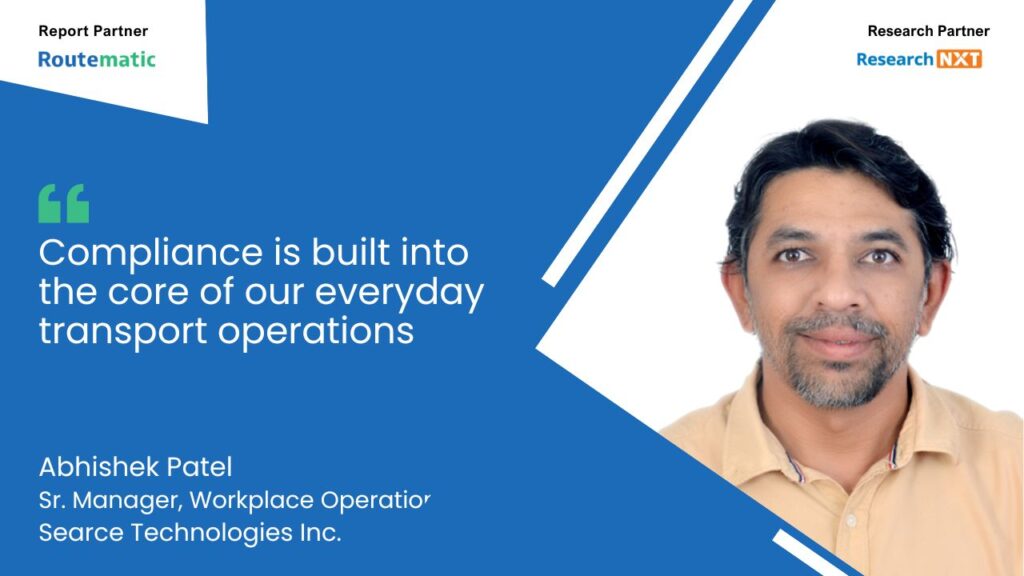
Conversation with Abhishek Patel, Senior Manager Workplace Operations, Searce
With over twenty one years across Real Estate, Facilities, Security, Transport, and Workplace Operations, Abhishek Patel has shaped processes that balance efficiency, compliance, and employee well being. His experience spans large scale workplace projects, centralised vendor management, and the setup of transport systems across diverse locations.
In this discussion with Research NXT, he gives a grounded view of how Searce manages its employee transport programme, what works well, and how an ideal future solution would involve an AI-driven predictive compliance engine integrating behaviour scoring, automated verification, geo-fenced risk alerts, and unified employee safety tools.
Can you share a brief overview of your professional journey and how it led to your current role?
Abhishek: My career over the last twenty one years has moved through real estate, facilities, security, and transport operations. The common thread across all these roles has been a focus on building scalable systems, driving compliance, and supporting workplace safety. I have led new office setups, centralised vendor processes, and implemented transport frameworks that support both operational continuity and employee expectations. This mix of hands on execution and strategic oversight shaped my current role in workplace operations and compliance.
How standardised are your transport processes across locations and shifts?
Abhishek: We follow a standard framework for all Searce locations. A centralised roster and scheduling process helps maintain consistency, and our fleet is GPS enabled with defined safety requirements. That said, each city brings its own realities, especially around demand patterns and vendor capability. While the processes are uniform, ensuring the same level of execution everywhere requires constant coordination and monitoring.
Read More
How do you ensure regulatory and internal compliance, and how are these controls tied to workplace safety?
Abhishek: Compliance is designed into daily transport operations. We conduct KYC and police verification for drivers, check licences and documentation, and ensure that vehicles meet safety and fitness requirements before deployment. All cars must carry GPS, safety kits, panic buttons, and valid permits. These checks are closely tied to workplace protocols like roster authentication, escort requirements for women, and emergency procedures coordinated with the Security team. Even with strong guidelines, compliance needs continual verification because any lapse creates operational risk.
What tools or audits do you use to ensure there are no lapses in daily operations?
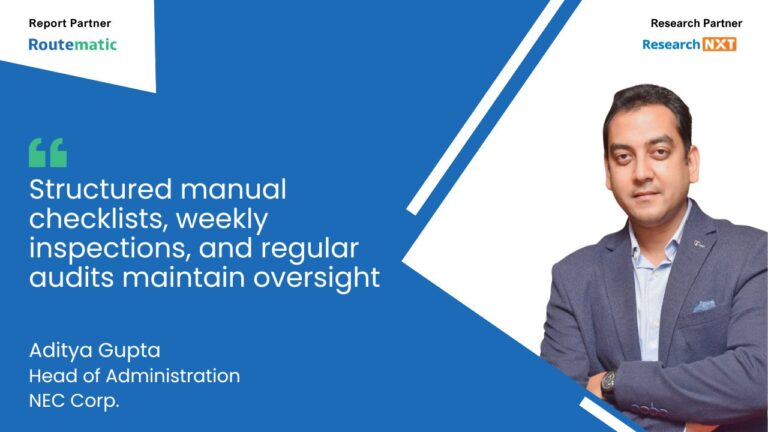
Abhishek: We use a combination of technology and physical audits. GPS dashboards help us monitor live movement, deviations, idle time, and driver behaviour. Automated roster audits allow us to compare planned versus actual trips. Alongside this, we conduct weekly fleet inspections, surprise on road checks, and periodic driver compliance audits. These layers together strengthen governance, although consistent alignment across all vendors and locations still requires active oversight.
How do you manage night shifts and other vulnerable commute scenarios?
Abhishek: Night operations require heightened attention. We run GPS checks before each trip, apply escort protocols for women when required, and lock routes to avoid detours. Any deviation triggers monitoring through our control setup, which operates with Admin and Security involvement. Despite these measures, night shifts remain resource intensive and depend heavily on coordination between teams.
How do you collaborate with HR, Finance, and other departments for policy updates?
Abhishek: Policy revisions follow a structured cross functional process. HR manages shift and eligibility considerations, Finance handles budgeting and vendor payments, and Security leads access control and emergency readiness. Leadership reviews performance and compliance metrics in monthly meetings. Once policies are approved, they are translated into SOPs, although ensuring uniform implementation across locations takes continuous communication.
Where do you see the most significant risks emerging in the future?
Abhishek: Several risks are becoming more prominent. Growing night operations increase the load on monitoring teams. Women safety regulations demand stronger documentation and traceability. Driver shortages affect continuity, and cybersecurity issues around roster and GPS data are rising. ESG mandates are pushing organisations toward electric fleets, but readiness varies by region. These factors make transport operations more complex and require better technology and planning.
If there were no constraints, what innovation would you introduce for compliance?
Abhishek: I would focus on reducing manual dependency. An AI-driven predictive compliance ecosystem that validates compliance in real time, scores driver behaviour, and generates automated alerts would significantly strengthen governance. Integrating this with geo fenced risk information and a unified employee safety interface would create a self regulating framework. Implementing such a system requires strong data alignment across stakeholders, which remains a challenge today.
How do you measure the success of your transport compliance and safety strategy?
Abhishek: We monitor operational metrics like travel time, on time arrival, documentation adherence, and driver compliance. We also track employee satisfaction, which improves when operations are consistent and safe. These metrics show progress, while the data helps us refine processes and identify where more structure or automation is needed.
Closing View
Abhishek’s experience reflects the broader reality of corporate mobility today. Organisations have frameworks and controls in place, but the growing complexity of workplace mobility means there is continuous pressure on compliance, safety, and predictability. The gaps often emerge in execution, vendor maturity, and the limits of manual oversight. As risks increase and expectations evolve, companies will need deeper visibility, stronger automation, and unified systems to deliver consistent and safe employee transport experiences.